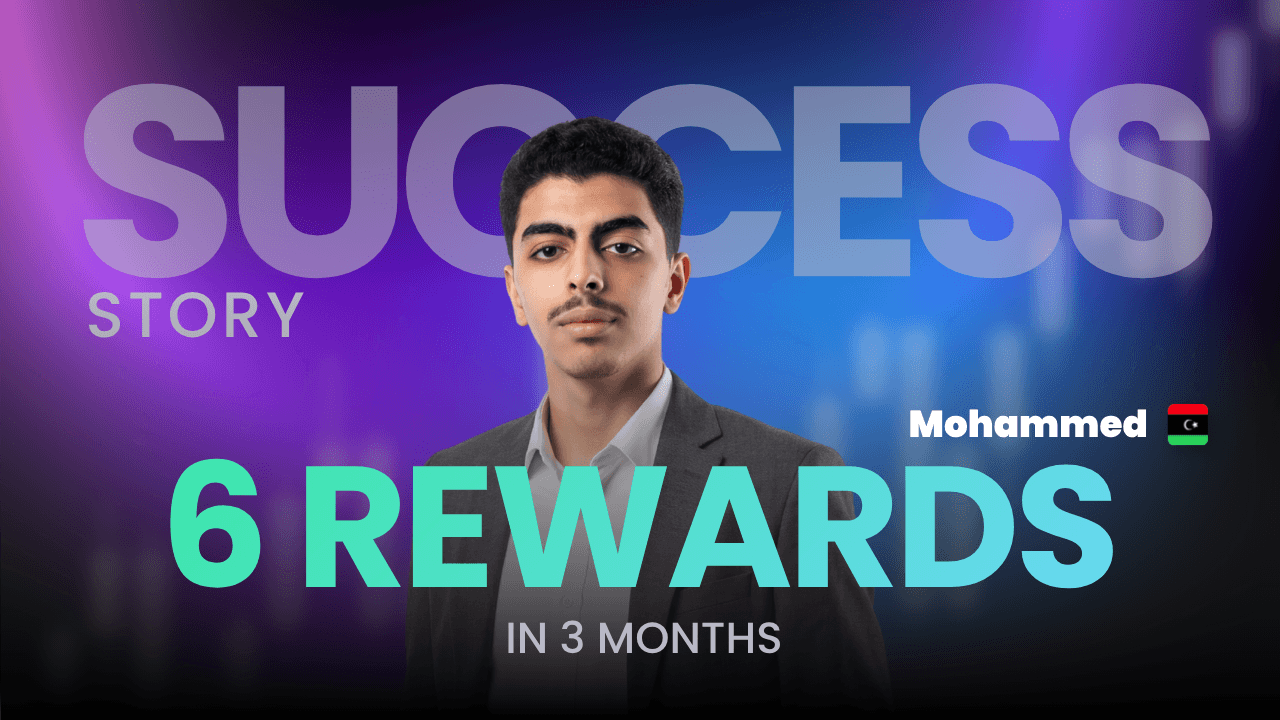
Mohammed had this interview for this story on his 23rd birthday. He comes from a background in business administration with a diploma, graduated with honors, and worked as a sales manager at a local market before trading took over. Four years and a scam at another firm later, he now holds a funded account with The Trading Pit and has completed six successful Reward withdrawals.
When asked what actually made the difference, he doesn't point to a chart pattern or an indicator. “When I talk to you about discipline,” he says, “it's honestly the hardest thing in this field, period.”
From a Business Diploma to the Market
Mohammed wasn't a total stranger to the idea of trading before he started. “I was studying the subject before I began seriously,” he says, but he admits the theory didn't stop him from rushing. “Like anyone eager for a field like this, especially one where there's no supervisor tracking your results, I jumped in before I'd actually learned enough.” The early mistakes that followed were the price of that head start. “I made a lot of mistakes at the beginning,” he says, “and started improving little by little.”
The $2,500 Lesson
Before funded accounts, Mohammed traded a personal account worth $2,500. He remembers treating it almost like a formal commitment to himself. “I took pen and paper and told myself I had to protect this capital and not mess with it randomly,” he says. He settled on a rule of never risking more than 1% per trade, a rule that kept the account safe but made the returns feel small. That changed when a friend told him about funded accounts. “There was a massive difference,” he says, “in terms of risk and return.”
Failed Once, Then Convinced by Proof
Mohammed's path to The Trading Pit wasn't his first attempt at funded trading, and it wasn't a smooth one. He bought accounts from several different companies first, and one of them scammed him outright. “It shattered my morale,” he says, “after all the effort I went through just to reach the withdrawal stage, and none of that effort was ever valued by them. It was a very bad experience.”
That history is part of why his early view of the entire industry was blunt. “Honestly, at first I considered them all scam companies,” he says. What changed his mind was watching people he actually knew post real withdrawal proof on social media, and later, a content creator he'd followed for a while and trusted for his transparency vouching specifically for The Trading Pit's rules and reputation. “A lot of what he said convinced me to buy an account from you,” Mohammed says. “And here I am now, convinced and genuinely satisfied with my experience.”
His advice to anyone still hesitating echoes his own path from skeptic to funded trader. “If you're afraid a company won't give you your withdrawals,” he says, “just follow the rules, and choose a company with an excellent reputation, like The Trading Pit.”
Rules That Look Like a Trap at First, and Aren't
Mohammed is candid that funded account rules, a maximum drawdown, a cap on what you can risk per trade, looked like red flags to him before he understood them. “To a beginner's eye, all these conditions look like a scam,” he says. “What he doesn't understand is that these are exactly the conditions that teach him how to stay disciplined and stop being reckless, because this market doesn't respect anyone reckless with their own account.”
The core difference, in his view, comes down to accountability that simply doesn't exist on a personal broker account. “There's no one watching over you there,” he says. “In a funded account, there's oversight, and it penalizes your mistakes. That's where the real secret is, to overcoming your emotions, at least to some degree, in how you actually behave.”
One Fixed Lot Size
That oversight is what finally fixed a habit Mohammed says had quietly worked against him for years. “In my early days, I used a different lot size and a different risk size every single day,” he says, “because there was no real oversight on me.” Funded trading changed the consequences instantly. “Here, things are completely different. Cross the line, and a warning comes to you.” Faced with that, he made a call he has stuck to since. “I made a final decision that I would fix my contract size,” he says, “and I stayed with it.”
What $2,500 Could Have Bought
Looking back at his personal account, Mohammed draws a comparison that clearly still strikes him. Risking that same $2,500 on personal capital limited what he could ever make from it. Using it instead to buy funded accounts, he estimates, could have put him in control of capital sizes exceeding half a million dollars. “This is truly crazy,” he says, “and wonderful.”
Six Rewards, and a Payment in Under Five Hours
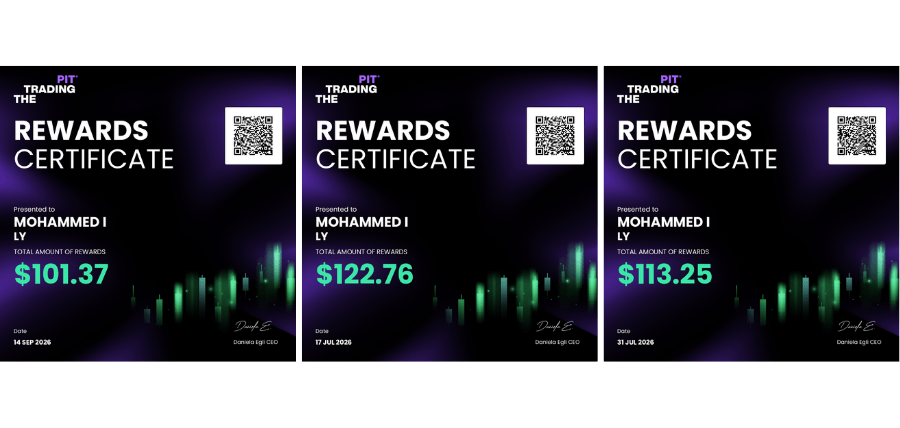
Mohammed's first Reward from The Trading Pit came to about $118, arriving after roughly two months spent working through the evaluation stages, then getting funded, then finally reaching a withdrawal. He is clear that the number was never really the point. “My joy wasn't about the size of the amount,” he says. “It was about the achievement itself, after patience of about two months or more.” He now counts six successful withdrawals with the firm. “I'm really proud of myself,” he says, “that I've completed six successful withdrawal operations with you. This is wonderful for anyone committed who doesn't fight the market.”
What stayed with him almost as much as the money was the speed and follow-through once he'd earned it. “The withdrawal process itself didn't take more than five hours,” he says, “from review to approval to the actual payout. I thank you sincerely for not disappointing what I expected of you. You proved trustworthy, and you earned that trust.”
What Fear Taught Him
Mohammed traces a lot of his early anxiety directly back to how carelessly he was entering trades. “When I used to enter trades randomly, it caused me a lot of distraction and real fear, about whether the trade would succeed or fail,” he says, “because fundamentally, it was random, not thought through.” That fear didn't disappear through willpower. It disappeared once the randomness did. “After I became someone committed to a clear plan,” he says, “the fear started to fade, little by little. That's a wonderful thing for me.”
Discipline Over Strategy
Ask Mohammed to rank discipline against strategy, and he doesn't hesitate. “We all see the truly successful people in this field telling their followers to be more disciplined,” he says, “but that's really the hardest thing in this field.” Strategy, by contrast, he sees as almost secondary. “Strategy is something you can learn and pick up in as little as a week,” he says. “This doesn't require a perfect strategy. It requires very high discipline.”
One Asset, One Setup
Mohammed trades exclusively in gold, drawn to how reliably active it is. “It has good movement and excellent liquidity, always,” he says, “and that gives it constant entry opportunities in most sessions.” He is just as firm about sticking to a single method. Running two strategies at once, he argues, even two that individually work, is still a mistake. “You'll become a distracted person,” he says. “It'll cause you distraction and chaos in your decisions too. I never recommend that. Use one simple entry method, and don't split your own focus.”
Why Consistency Matters More Than Any Single Day
Mohammed's clearest illustration of consistency is a simple one. “Imagine you made $1,000 yesterday, and today you made $200,” he says. “You'll feel disappointed, and that affects you, and your psychology, which might make you reckless the next day.” Consistency, in his view, is the fix most traders resist because it asks them to stop chasing their best days. “A lot of people don't like this,” he says, “but I consider consistency one of the laws of success.”
It's a fitting note for where he says he's headed next. Four years in, six Rewards deep, and still, in his own words, “moving toward scaling more and more” with The Trading Pit.