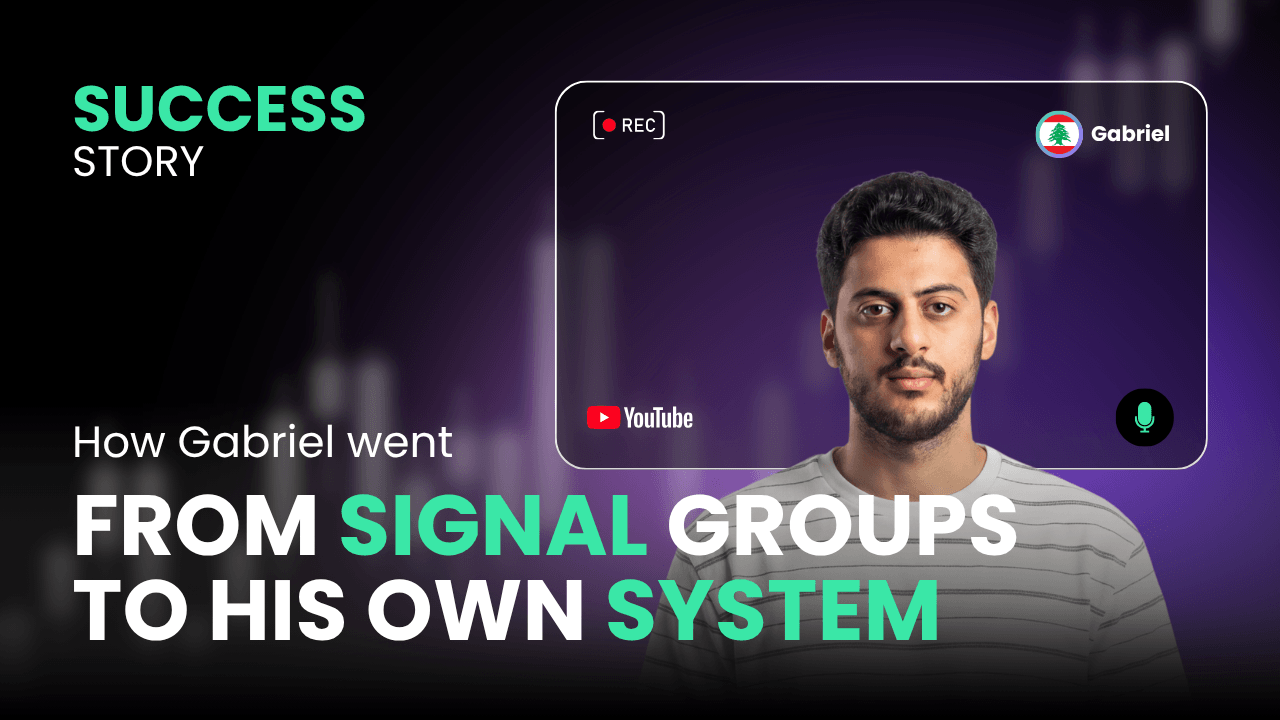
Most 20-year-olds are still figuring out what they want to do. Gabriel is already doing two things at once: flying planes and trading futures.
A newly qualified pilot from Lebanon, Gabriel has spent the last three years teaching himself to trade around high school exams, flight school, and now a full training schedule. He lost money before he made any. He borrowed from his father to fund his first trades. He bought and failed challenge after challenge before one finally stuck. Today he trades a funded futures account with The Trading Pit, and he describes his first reward less as a payday and more as proof that the process he built for himself actually works.
From an Instagram Ad to a High School Habit
Gabriel's introduction to trading was almost accidental. In high school, he came across a video of someone making money from their phone and thought, if he can do it, so can I. With finals looming in his last two years of school, he could only treat it as a side interest, picking up ideas where he could.
His first real attempts were rough. He traded forex and gold on his own and did not enjoy it, then followed signals from a Telegram group for a while. It made him a little money, but it was not what he wanted. "I wanted to have my own thing," he says. "I wanted to be able to call myself a trader, not follow someone else."
Around the same time, still a teenager, he began trading his own capital, some of it borrowed from his father. "I had to ask money from my dad and tell him, trust me, it's gonna work," he recalls. It mostly did not. He lost more than he made, and the psychological side of trading, the greed, the impatience, hit him before he had any framework to deal with it.
Learning to Fly, Learning to Trade
After high school, Gabriel enrolled in aviation school to become a pilot, a program that took a year and a half instead of a traditional four-year degree. During a quieter stretch near the end of his training, he found a Lebanese YouTuber affiliated with The Trading Pit and worked through his playlist on ICT strategy, this time trying it out on his own rather than copying anyone else's calls.
The timing suited his life in an unplanned way. His strategy centers on the New York AM session, which, thanks to the time difference, falls in the late afternoon in Lebanon. "I can wake up in the morning, do my studies, go to the gym, have lunch with my family, and then dedicate this hour and a half in the afternoon for trading," he says. It has let him build a trading habit without it ever competing with his studies.
Why Gabriel Chose The Trading Pit
By the time Gabriel found that YouTuber's content, he had already been through a rough stretch with prop trading on the forex side: two funded challenges passed, but rewards he was never able to collect because revenge trading undid the progress before he could withdraw. He stepped away for a couple of months before futures, and The Trading Pit, brought him back.
Two things kept him there. First, access. Lebanon is a restricted country for most proprietary trading firms. "All of the others, Lucid, Apex, all of them have Lebanon as a restricted country," he explains. The Trading Pit is the one firm he has found that lets him trade at all.
Second, the introduction itself carried some built-in trust. The YouTuber he had been learning ICT from was already affiliated with The Trading Pit and offered a 10% discount code, which is how Gabriel bought his first challenge. Watching someone he already followed for strategy vouch for the firm made the decision an easier one.
More Than a Dozen Tries Before It Clicked
Gabriel's first challenge did not go to plan. He missed passing by half a percent, a margin close enough to keep him coming back rather than walking away. What followed was a long stretch of repeated attempts, by his own rough count somewhere in the range of a dozen and a half challenges, before one finally held up.
"So let me do it again until it works," is how he sums up his mindset at the time. Since April this year, he has traded fully on his own reasoning, focused on futures and ICT, without leaning on anyone else's signals.
The Three Weeks That Changed Everything
Gabriel bought the challenge that would become his first funded account on July 24. He was not chasing a big number, just the minimum five consecutive profitable trading days needed to qualify for a reward. He remembers the exact figure he was sitting on when he hit the target: $200.90.
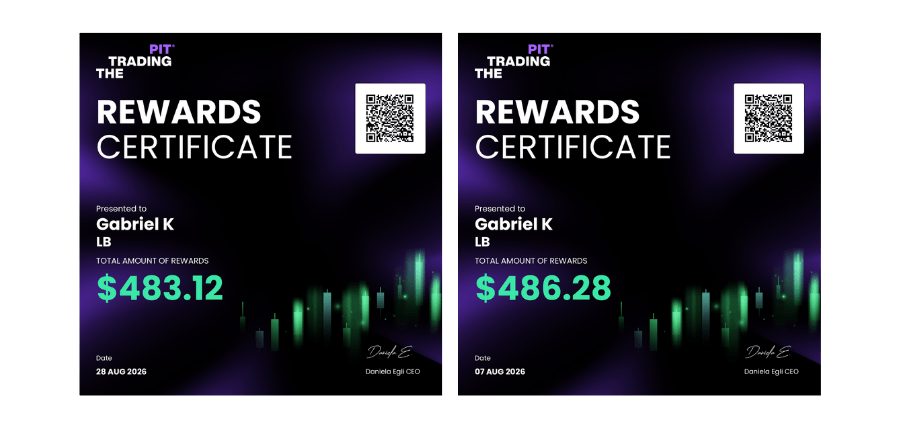
Less than three weeks later, on August 9, the reward landed in his bank account: $486.20. "My dad was next to me," he says. "He told me this was a scam, it's not gonna work. Look, it worked. It's here with me now. It meant everything to me. Really one of the happiest moments of my life."
The days right after were not all confidence. "The first two or three days I felt scared, like I didn't want to lose it all," he admits. That feeling did not last. It turned into a push to scale up carefully, sizing trades a little larger while still keeping risk in check, rather than a reason to slow down.
Turning External Rules Into His Own Discipline
Gabriel is candid that his psychology is still a work in progress. Revenge trading and greed cost him accounts before, and he says he is still not fully past them. What has changed is what he does about it in the moment.
"When I lose, I close TradingView, take a walk, take a breath, drink a glass of water, and then come back with a clear mind," he says. He points to a recent example directly: on his current funded account, his very first trade went into a $400 drawdown before he had even started, and instead of chasing it back immediately, he stuck to his process. He is now sitting on roughly 1.5% profit on that same account.
He also draws a sharp line between trading his own money and trading a funded account. Losing his father's money came with guilt. Losing a purchased challenge feels different, more concentrated, because another attempt is not always available right away. "I might not have another shot at buying an account for another two weeks," he says, "so that's it."
Asked whether mindset or strategy matters more, he does not hesitate. "Anyone can watch a YouTube playlist and learn a strategy in a month," he says. "But nothing will stick in your account unless you have the mindset, the discipline. If strategy was the main thing, more people would be profitable."
Gabriel's Advice to Other Traders
Asked what he would tell himself at the start of his journey, Gabriel's answer was simple. "Be patient. It's gonna come, not today, not tomorrow. The more you force it, the longer it'll take to come. Be patient, and trust yourself."
What's Next for Gabriel
With Lebanon closed off to most other firms, Gabriel's growth plan runs almost entirely through The Trading Pit. His near-term goal is to hold five funded accounts at once, all in the earning phase and synced together, before looking at what else might be possible elsewhere. "This is my next step," he says. "Having five accounts with you guys, all of them in the earning phase, syncing them together."
For a trader who spent three years failing quietly before his first public win, the plan is less about a single big reward and more about repeating the process he finally trusts.