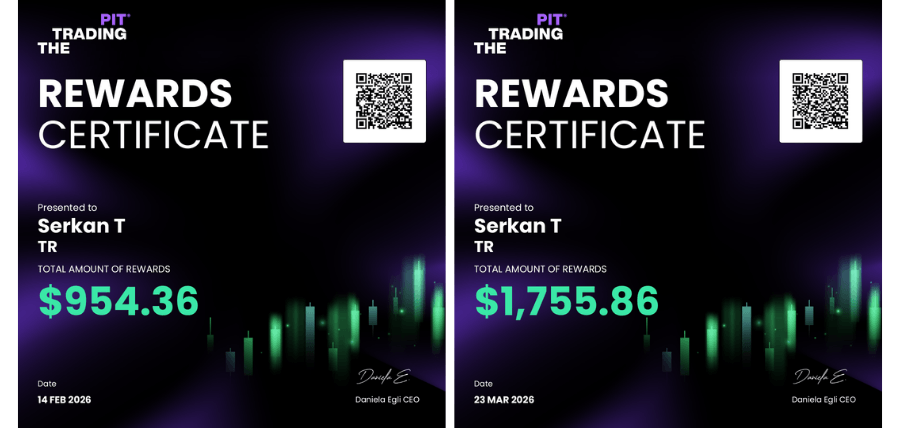
Serkan’s trading journey began during the uncertainty of the COVID years. Like many others, he entered the markets searching for additional income - but without a clear strategy or structured approach.
At the time, he was working full-time as an IT specialist, balancing his job with trading during the New York session in the evenings. This routine helped him develop early discipline and time management, but consistency remained out of reach.
“I started without knowledge. I was trading randomly,” he explains.
The Early Struggle: High Wins, Bigger Losses
In the beginning, Serkan experienced what many traders go through - a high win rate combined with poor risk control.
He could string together multiple winning trades, but a single loss would wipe out everything.
“I was winning 7, 9, 10 trades… but one loss was taking all my account.”
The core issue wasn’t strategy - it was psychology.
He wasn’t able to cut losses.
The Turning Point: Learning to Cut Losses
Everything changed when Serkan focused on controlling his downside.
“If we can’t stop our losses, we can’t succeed in anything,” he says.
Once he started cutting losses early, consistency followed.
From that moment in 2026, his performance shifted:
Why Prop Trading Changed His Approach
Serkan chose prop firms over personal capital for one key reason: pressure.
With a small personal account, the urge to overtrade and force profits was constant.
Prop firm rules removed that pressure.
“The rules are protecting our accounts,” he explains.
Daily loss limits and consistency requirements forced him to stay disciplined - something he previously lacked.
Building Trust Through Results
Initially, he had doubts about prop firms.
That changed after his first reward experience.
“When I received confirmation the same day and the rewards arrived the next day, I was surprised.”
Speed and reliability built trust - reinforcing his decision to continue trading within structured environments.
The Psychological Barrier of Scaling
Despite achieving consistency, Serkan remains cautious about scaling.
He understands that larger capital introduces new emotional challenges.
“When I saw drawdown on a bigger account, my heart was shaking,” he admits.
His approach is deliberate:
The Hardest Lesson: Trading Without Pressure
One of the biggest challenges wasn’t technical - it was external pressure.
“When you have bills waiting and you are trying to win, it becomes nearly impossible,” he explains.
Detaching trading from immediate financial need was critical.
Once that pressure disappeared, decision-making improved.
Serkan’s Trading Rules
His strategy today is simple and controlled:
“Don’t trade all sessions… choose one and master it,” he advises.
Looking Ahead
Serkan’s long-term goal is clear: scale to a $1M account.
But the priority remains unchanged - consistency first.
His journey shows that success in trading doesn’t come from complexity or constant activity.
It comes from control, structure, and the ability to manage losses.
And once that foundation is built, results follow naturally.