For many traders, the journey starts with a clear goal.
For Shef, it started almost by accident.
Before trading became his main focus, Shef had already explored several different paths. He worked in technical support, currency exchange, crypto projects, and eventually built a successful clothing business in Ukraine.
Trading was not part of the plan.
But after being introduced to a trading community through a friend, curiosity turned into education, education turned into practice, and practice eventually turned into results.
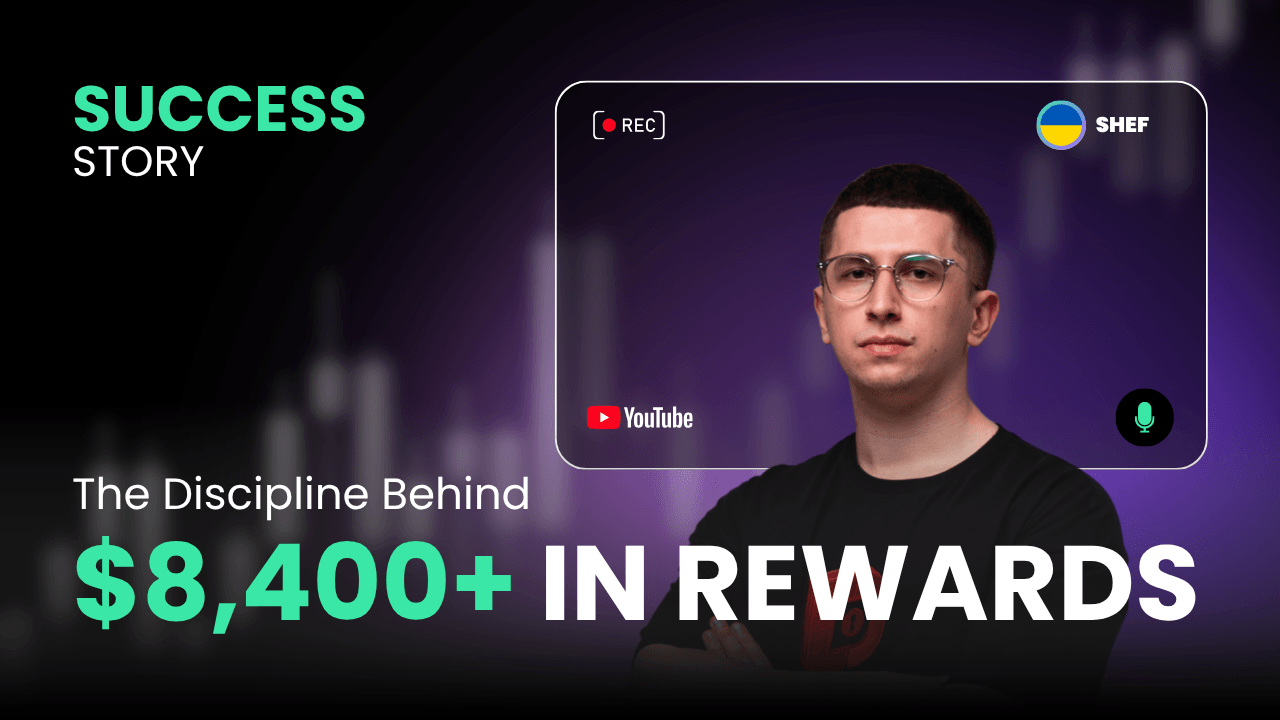
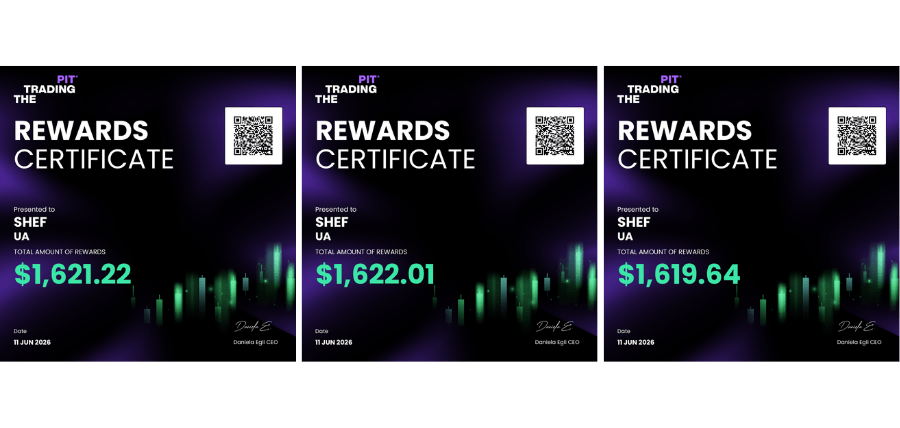
Today, at 27 years old, Shef lives in Kyiv and has earned more than $8,400 in rewards with The Trading Pit across 6 rewards.
Across his broader prop trading journey, he has received around $50,000 in total rewards.
But his story is not about fast success.
It is about patience, finding the right strategy, building discipline, and learning to treat trading like a profession.
From Entrepreneurship to Trading
Before entering the markets, Shef was focused on business.
He had experience in several industries, but his most recent project was a popular clothing store in Ukraine. Through that business, he developed experience in sales, operations, customer communication, and building something from the ground up.
Trading entered his life through a friend who was already active in the industry.
At the time, Shef was invited to join an educational project as a mentor for product-based business. The project already had a trading community, and the more he saw what traders were doing, the more interested he became.
At first, he was skeptical.
He had never planned to become a trader.
But seeing real results from people around him made him think differently.
He had access to someone who could teach him.
He had the time to learn.
So he decided to give trading a chance.
That decision became the beginning of a completely new path.
Balancing Business and Trading
Shef did not immediately quit his business to trade full time.
Instead, he approached trading as a side project while continuing to run his clothing store.
He would trade in the morning or during the day, then spend the rest of his time managing his business.
Looking back, he believes this was the right decision.
Many beginners enter trading expecting it to replace their income quickly. Shef sees that as a mistake.
Trading takes time.
Some traders need six months or a year to understand the basics. Others may need two or three years before they begin to build consistency.
Without another source of income, that learning process can become stressful very quickly.
For Shef, keeping his business allowed him to study and trade without relying on the markets to support him from day one.
Only after trading became more interesting and started producing financial results did he decide to shift his focus fully.
Finding the Right Strategy
Shef's path to consistency was not straightforward.
Like many traders, he tested several different trading concepts before finding one that worked for him.
He started with Smart Money concepts, which were popular in his market. But the approach did not match his personality.
He found it difficult to sit in front of the charts for long periods, waiting for setups that could appear at any time. He also did not feel comfortable holding positions for several days.
After that, he tested demand and supply strategies, higher time frame trading, and other approaches.
Still, nothing felt natural.
The turning point came when he discovered Market Profile and Auction Market Theory.
This approach gave him a clearer way to understand the market and make decisions. More importantly, it fit the way he naturally thinks as a trader.
That is when things started to change.
For Shef, one of the biggest lessons was that a strategy has to match the trader using it.
A concept can be popular.
It can work for other people.
But if it does not fit your personality, your schedule, or your psychology, it may be difficult to execute consistently.
The First Reward
It took Shef around one to one and a half years to receive his first reward.
After such a long learning process, many traders might expect that moment to feel emotional.
For Shef, it was different.
He did not feel a huge rush of excitement. He did not see it as luck or a surprise.
It simply felt like confirmation.
The time, energy, and effort he had put into trading were finally starting to pay off.
To him, the reward felt almost like a salary.
Something earned.
Something expected after doing the work.
That mindset says a lot about how Shef sees trading. He does not treat rewards as random wins. He sees them as the result of a process.
Learning Discipline Through Prop Firm Rules
When Shef first heard about prop firms, the idea felt unusual.
Like many traders, he found it surprising that someone could buy a challenge, access larger capital, and earn rewards from trading.
But once he understood how prop firms worked, he also understood the other side of the model.
Passing a challenge is not easy.
There are rules.
There are limits.
There are risk requirements.
And for Shef, those rules eventually became one of the things that helped him grow.
He believes futures prop trading rules were especially important for his discipline.
Compared to some CFD accounts, futures accounts can have tighter drawdown rules and trailing drawdown requirements. This forced him to adjust his strategy, manage risk more carefully, and protect capital more seriously.
Instead of seeing the rules only as limitations, Shef saw them as structure.
They helped him become more precise.
They helped him respect risk.
And over time, they helped him become a more disciplined trader.
Why The Trading Pit
For Shef, The Trading Pit became part of his growth because it gave him more than access to capital.
It gave him structure.
After already understanding how prop firms worked, Shef saw that the real challenge was not only passing an evaluation. It was learning how to trade within rules, manage risk properly, and stay disciplined when conditions became difficult.
This was especially clear when he started trading futures.
Compared to some other account types, futures trading required him to be more precise with risk. The tighter drawdown limits and trailing drawdown structure forced him to adjust his approach, protect his capital, and think more carefully before entering a position.
Instead of seeing these rules as a limitation, Shef saw them as something that helped him improve.
The Trading Pit’s structure pushed him to become more disciplined, more selective, and more aware of how every decision could affect the bigger picture.
For him, that was one of the most valuable parts of the experience.
The rules did not slow him down.
They helped shape the way he trades today.
Psychology Is the Real Challenge
When asked what matters most in trading, Shef does not only talk about strategy.
He talks about psychology.
Even today, after receiving multiple rewards, he says psychology is something he continues to work on every day.
For him, a trader can have a strong strategy, but without emotional control and discipline, that strategy can still fail.
Bad sleep can affect trading.
Stress can affect trading.
Poor nutrition, illness, family problems, and lack of focus can all affect decision-making.
That is why Shef pays attention to life outside the charts too.
Good sleep.
Proper nutrition.
Sport.
For him, these habits help clear the mind and support better decisions in the market.
He also recognizes one of the hardest challenges many traders face: knowing they should not trade, but trading anyway.
Sometimes, a trader can understand that they are not in the right mental state. But they still sit down, open the charts, and take a position.
Shef has experienced this himself.
His solution is to step away, reset, and come back with a clearer mind.
Sometimes the best trading decision is not to trade at all.
Treating Trading Like a Profession
One of Shef's strongest beliefs is that many traders fail because they do not treat trading like real work.
They approach the charts casually.
They trade without structure.
They click around without a clear plan.
But trading requires rules, discipline, and consistency.
For Shef, having a clear system is essential. A trader needs to know what they are looking for, when they are allowed to trade, when they should stop, and what conditions must be met before entering a position.
Without that structure, even a good strategy becomes difficult to execute.
This is why discipline matters so much.
Not only discipline with prop firm rules.
Discipline with your own rules too.
Scaling Responsibly
Today, Shef's goal is not to chase higher monthly percentages.
It is to scale responsibly.
He believes that many traders eventually reach the same realization: consistency matters more than aggressive returns.
A trader who can generate 2% or 3% consistently while managing larger capital can build a much more sustainable path than someone constantly chasing 10% or 15% months.
For Shef, the next step is increasing allocation, continuing to grow through prop trading, and also building his own personal trading capital.
The goal is not to take more risk.
The goal is to grow while keeping the same disciplined approach.
The Lesson From Shef's Journey
Shef's story shows that consistency in trading does not come from finding a shortcut.
It comes from time, patience, structure, and self-awareness.
He did not become consistent by jumping from one strategy to another forever. He became consistent by finding an approach that matched his personality, building discipline around it, and treating trading like a profession.
His journey is a reminder that traders do not need to rush the process.
They need to give themselves time to learn.
Time to test.
Time to fail.
Time to improve.
And most importantly, time to build a process they can actually follow.
For Shef, trading started almost by accident.
But consistency came from discipline.
Watch the full story here:
All accounts provided to our clients are demo accounts with virtual funds. All trading activities occur in a simulated environment. For more information, visit our FAQ.